


When it comes to the world of steel tubes, the S355J2H Tube stands out as a remarkable product. As a dedicated supplier of S355J2H Tube, I've had the privilege of witnessing its wide - ranging applications and understanding its unique properties. One of the most crucial aspects that clients often inquire about is the yield strength of the S355J2H Tube. In this blog, I'll delve deep into what yield strength is, the specific yield strength of S355J2H Tube, and how it impacts its use in various industries.
Understanding Yield Strength
Before we specifically discuss the yield strength of S355J2H Tube, it's essential to understand what yield strength means. Yield strength is a fundamental mechanical property of materials, especially metals. It represents the stress at which a material begins to deform plastically. In simpler terms, when a force is applied to a metal, it first deforms elastically. This means that once the force is removed, the metal returns to its original shape. However, when the applied stress reaches the yield strength, the metal starts to deform permanently.
To measure yield strength, engineers typically conduct a tensile test. In this test, a sample of the material is gradually pulled until it breaks. During the process, the stress and strain are measured. The point at which the stress - strain curve deviates from linearity is considered the yield strength. There are two common ways to define yield strength: the upper yield point and the lower yield point. The upper yield point is the maximum stress at the onset of plastic deformation, while the lower yield point is the relatively constant stress that follows.
Yield Strength of S355J2H Tube
S355J2H Tube is a type of high - quality structural steel tube. The "S355" in its name indicates that the minimum yield strength of this steel is 355 MPa (megapascals). This means that, under normal conditions, the S355J2H Tube can withstand a stress of up to 355 MPa before it starts to deform plastically.
However, it's important to note that the actual yield strength can be affected by several factors. The manufacturing process plays a significant role. For example, if the tube is hot - rolled, the heat treatment during the process can influence the grain structure of the steel, which in turn affects its mechanical properties. Cold - working processes can also change the yield strength. When the tube is cold - drawn or cold - rolled, the deformation can increase the yield strength due to work hardening.
The chemical composition of the S355J2H Tube also impacts its yield strength. S355J2H steel contains elements such as carbon, manganese, silicon, and small amounts of other alloying elements. The precise balance of these elements is carefully controlled during the steel - making process. For instance, an appropriate amount of manganese can improve the hardenability and strength of the steel, while excessive carbon can make the steel more brittle.
Applications Based on Yield Strength
The yield strength of S355J2H Tube makes it suitable for a wide range of applications. In the construction industry, it is commonly used for building structures such as bridges, high - rise buildings, and industrial facilities. The high yield strength ensures that the tubes can support heavy loads without undergoing excessive deformation. For example, in a bridge, the S355J2H Tubes can be used as structural members to bear the weight of traffic and the bridge itself.
In the mechanical engineering field, S355J2H Tubes are used in the manufacturing of machinery and equipment. They can be used as shafts, frames, or other load - bearing components. The ability to withstand high stress without permanent deformation makes them reliable for long - term use.
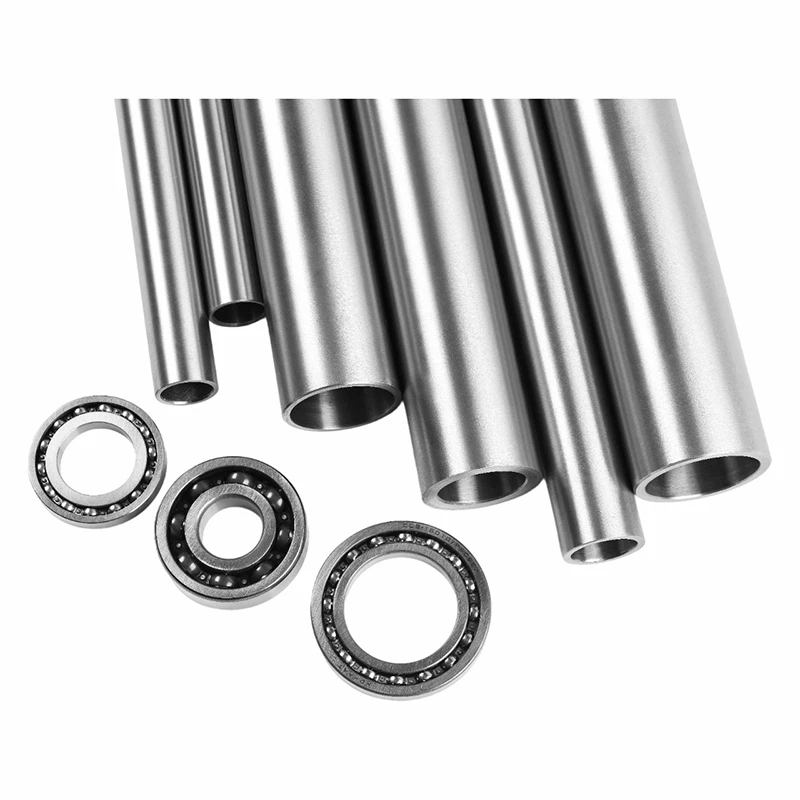
Compared with other types of tubes, such as 20CrMnTi Steel and P5 Pipe, S355J2H Tube offers a good balance between strength and cost - effectiveness. 20CrMnTi Steel is often used in gears and other high - precision parts due to its excellent hardenability and wear resistance. P5 Pipe, on the other hand, is more suitable for high - temperature and high - pressure applications in the oil and gas industry. While these materials have their own unique advantages, S355J2H Tube's yield strength makes it a versatile choice for general structural and mechanical applications.

Quality Control and Assurance
As a supplier of S355J2H Tube, we place great emphasis on quality control. To ensure that the tubes meet the specified yield strength, we conduct a series of tests. In addition to the tensile test, we also perform non - destructive testing methods such as ultrasonic testing and magnetic particle testing. These tests can detect internal and surface defects that may affect the mechanical properties of the tubes.
We also maintain strict control over the manufacturing process. From the selection of raw materials to the final heat treatment, every step is carefully monitored. Our production facilities are equipped with advanced equipment and operated by experienced technicians. This ensures that the S355J2H Tubes we supply have consistent quality and reliable yield strength.
Conclusion
In conclusion, the yield strength of S355J2H Tube is a key factor that determines its performance and application range. With a minimum yield strength of 355 MPa, it offers excellent load - bearing capacity and reliability. Whether in construction, mechanical engineering, or other industries, S355J2H Tube has proven to be a valuable material.
If you are in need of high - quality S355J2H Tubes for your projects, I encourage you to reach out to us. We are committed to providing you with the best products and services. Our team of experts can offer you professional advice on the selection and application of S355J2H Tubes. Contact us today to start a procurement discussion and find the perfect solution for your needs.
References
- ASM Handbook Volume 1: Properties and Selection: Irons, Steels, and High - Performance Alloys.
- ISO 6892 - 1:2019 Metallic materials — Tensile testing — Part 1: Method of test at room temperature.
- EN 10210 - 1:2006 Hot finished structural hollow sections of non - alloy and fine grain steels — Part 1: Technical delivery requirements.