


Hey there! As a supplier of P9 pipes, I've been getting a lot of questions lately about the impact resistance of these pipes. So, I thought I'd take a deep dive into this topic and share what I know with you all.
First off, let's talk about what P9 pipe is. P9 pipe is a type of seamless steel pipe made from a specific alloy. It belongs to the family of chromium - molybdenum alloy steel pipes. These pipes are known for their excellent high - temperature strength, corrosion resistance, and, of course, their impact resistance.
Understanding Impact Resistance
Impact resistance is the ability of a material to withstand a sudden force or shock without breaking or deforming significantly. In the case of P9 pipes, this property is crucial, especially in applications where the pipes may be exposed to sudden impacts. For example, in industrial settings, pipes might be hit by moving equipment or objects, and in high - pressure systems, sudden pressure surges can act as an impact force.
Factors Affecting the Impact Resistance of P9 Pipe
- Alloy Composition: The alloy used in P9 pipes is carefully formulated. It contains about 9% chromium and 1% molybdenum. Chromium enhances the corrosion resistance and also contributes to the overall strength of the pipe. Molybdenum, on the other hand, improves the high - temperature properties and helps in maintaining the pipe's toughness. This combination of elements gives P9 pipes their good impact resistance. When compared to P5 Pipe, which has a different alloy composition, P9 generally shows better performance in terms of impact resistance due to its higher chromium and molybdenum content.
- Heat Treatment: Proper heat treatment is essential for P9 pipes. Heat treatment processes like annealing, normalizing, and tempering can significantly affect the microstructure of the pipe. A well - heat - treated P9 pipe will have a fine - grained and homogeneous microstructure, which is beneficial for impact resistance. For instance, tempering after quenching can relieve internal stresses and improve the ductility of the pipe, allowing it to absorb more energy during an impact.
- Manufacturing Process: The seamless manufacturing process of P9 pipes also plays a role. Seamless pipes have a more uniform structure compared to welded pipes. This uniformity means that there are no weak points along the pipe, such as weld seams, which could potentially fail under impact. The seamless nature of P9 pipes ensures that the impact force is distributed more evenly throughout the pipe, enhancing its ability to resist damage.
Applications Benefiting from P9 Pipe's Impact Resistance
- Power Generation: In power plants, especially those using fossil fuels or nuclear energy, P9 pipes are often used in high - temperature and high - pressure systems. These pipes may be exposed to vibrations and sudden pressure changes, which can act as impact forces. The good impact resistance of P9 pipes ensures the reliability and safety of these systems. For example, in steam lines, where high - pressure steam is flowing, any sudden blockage or valve closure can create a shockwave. P9 pipes can withstand these shocks without failing, preventing potential disasters.
- Petrochemical Industry: In the petrochemical industry, P9 pipes are used for transporting various chemicals and hydrocarbons. The pipes may be subject to impacts during installation, maintenance, or due to external factors like earthquakes. Their impact resistance helps in preventing leaks and spills, which are not only dangerous but also environmentally harmful.
- Automotive Half - Shaft Sleeve Pipe Comparison: While Automotive Half - Shaft Sleeve Pipe has its own set of requirements for impact resistance, P9 pipes offer a different level of performance. Automotive half - shaft sleeve pipes are designed to handle the dynamic forces in a vehicle's drivetrain. P9 pipes, on the other hand, are more focused on high - temperature and high - pressure applications. However, the concept of impact resistance is important in both cases.
Testing the Impact Resistance of P9 Pipe
To ensure the quality of P9 pipes, various tests are conducted. One of the most common tests is the Charpy impact test. In this test, a notched specimen of the P9 pipe is struck with a pendulum hammer. The energy absorbed by the specimen during the impact is measured. A higher energy absorption indicates better impact resistance.
Another test is the drop - weight test. In this test, a heavy weight is dropped onto the pipe from a certain height. The pipe is then examined for any signs of cracking or deformation. These tests help in determining if the P9 pipes meet the required standards for impact resistance.
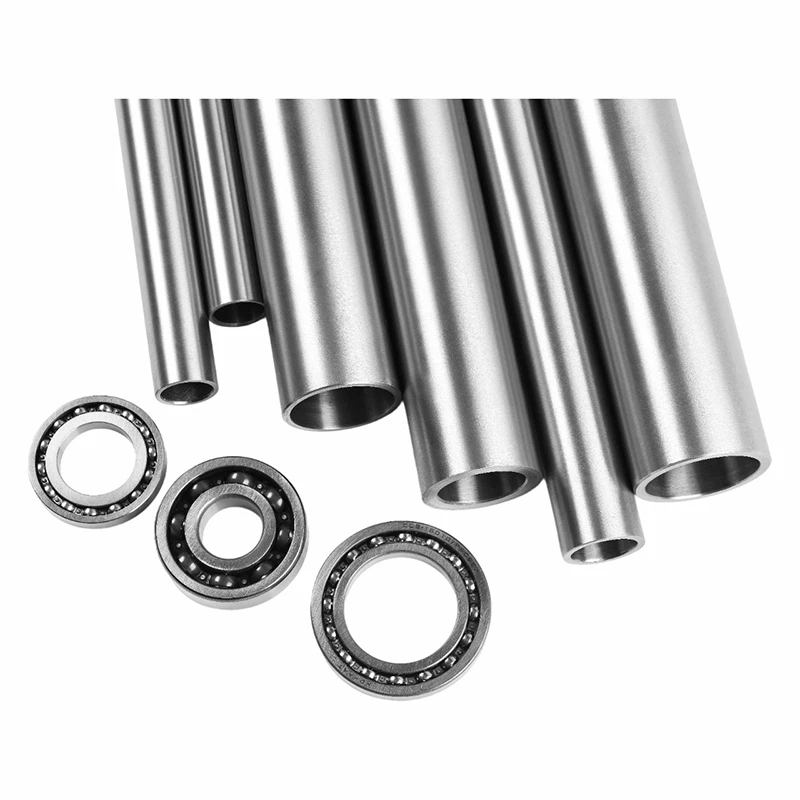

Comparison with P11 Pipe Material
P11 Pipe Material is another type of chromium - molybdenum alloy steel pipe. While both P9 and P11 pipes have good impact resistance, they have some differences. P11 has a lower chromium content compared to P9. This means that in some high - temperature and high - corrosion applications, P9 may be a better choice. However, P11 may be more suitable in situations where the temperature is not as extreme and cost is a major factor.
Maintaining the Impact Resistance of P9 Pipe
To keep the impact resistance of P9 pipes at its best, proper installation and maintenance are necessary. During installation, care should be taken to avoid any physical damage to the pipes. For example, using proper lifting equipment and avoiding rough handling can prevent scratches and dents, which could weaken the pipe.
Regular inspections are also important. Inspections can detect any signs of corrosion, wear, or damage early on. If any issues are found, appropriate measures can be taken, such as repairing or replacing the affected parts.
Conclusion
In conclusion, the impact resistance of P9 pipes is a result of their carefully designed alloy composition, proper heat treatment, and seamless manufacturing process. This property makes them suitable for a wide range of applications in industries like power generation, petrochemicals, and more. Whether it's withstanding sudden pressure changes in a power plant or impacts during installation in the petrochemical industry, P9 pipes have proven their reliability.
If you're in the market for high - quality P9 pipes or have any questions about their impact resistance or other properties, I'd love to have a chat with you. Feel free to reach out for more information and let's start a discussion about your specific requirements. We can talk about how P9 pipes can meet your needs and ensure the success of your projects.
References
- ASME Boiler and Pressure Vessel Code, Section I and Section VIII
- ASTM standards related to chromium - molybdenum alloy steel pipes
- Technical literature from steel manufacturers on P9 pipe properties