


Hey there! I'm a supplier of P5 pipes, and today I wanna chat about the quality standards for these pipes. P5 pipes are super important in a bunch of industries, like power generation, petrochemicals, and more. So, getting the quality right is a big deal.
First off, let's talk about the chemical composition. P5 pipes are made of alloy steel, and the chemical makeup has to be spot - on. The main elements in P5 pipes include chromium (Cr), molybdenum (Mo), and a bit of carbon (C). The chromium content usually ranges from 4.00% to 6.00%. Chromium is great for enhancing the pipe's corrosion resistance and high - temperature strength. Molybdenum, with a content of around 0.45% to 0.65%, helps improve the pipe's hardenability and creep resistance. Carbon content is kept relatively low, typically between 0.08% and 0.15%, to prevent excessive hardness and brittleness.
The limits for other elements also matter. For example, the manganese (Mn) content should be between 0.30% and 0.60%. Silicon (Si) is usually in the range of 0.50% max. Phosphorus (P) and sulfur (S) are considered impurities, and their contents are strictly controlled. Phosphorus should be no more than 0.030%, and sulfur no more than 0.030%. Keeping these impurities low is crucial because they can have a negative impact on the pipe's mechanical properties.
When it comes to mechanical properties, P5 pipes have some specific requirements. The minimum yield strength is around 205 MPa. Yield strength is the stress at which the pipe starts to deform plastically. The minimum tensile strength is about 415 MPa. Tensile strength is the maximum stress the pipe can withstand before breaking. Elongation is another important factor. The minimum elongation in a 2 - inch (50.8 mm) gauge length should be 30%. This shows how much the pipe can stretch before it fails, which is vital for applications where the pipe might be subjected to some bending or stretching.
The hardness of P5 pipes is also regulated. The maximum hardness is usually specified to ensure that the pipe is neither too hard (which could make it brittle) nor too soft (which could lead to deformation under normal operating conditions).

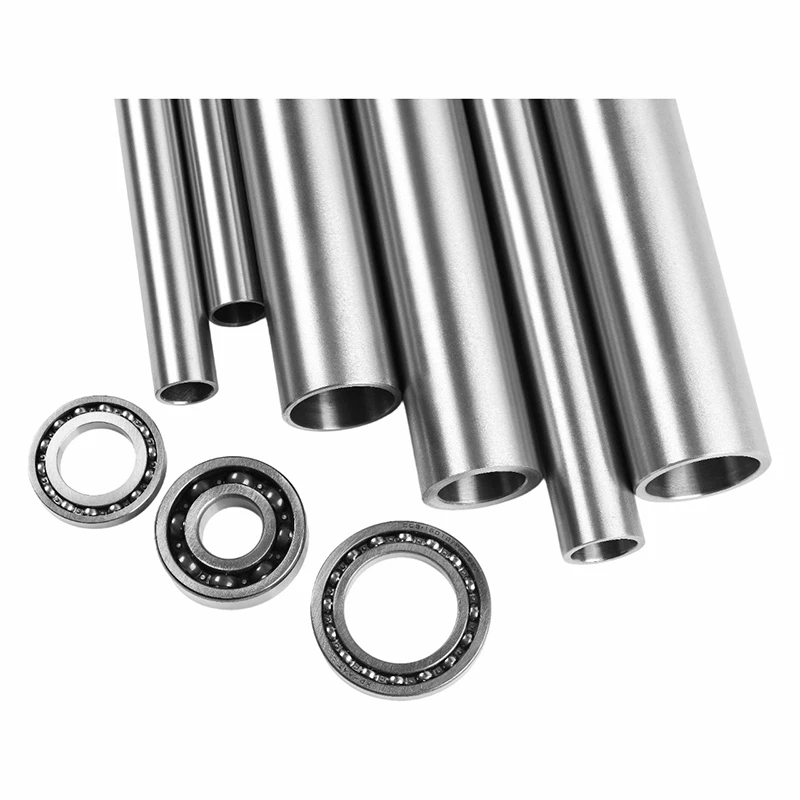
In terms of dimensional accuracy, P5 pipes need to meet certain standards. The outer diameter tolerance is relatively tight. For example, for pipes with an outer diameter less than 114.3 mm, the tolerance might be ±0.75% of the specified outer diameter. For larger - diameter pipes, the tolerance might be a bit different but still precisely defined. The wall thickness tolerance is also important. It can vary depending on the pipe size, but generally, it's within a certain percentage range of the specified wall thickness. This ensures that the pipe has the right structural integrity and can handle the pressure and load it's designed for.
Surface quality is another key aspect. The surface of P5 pipes should be free from cracks, scratches, pits, and other defects. A smooth surface not only looks good but also helps prevent corrosion initiation points. Any surface imperfections can act as stress concentration areas, which can lead to premature failure of the pipe.
Now, let's touch on some related standards and products. The Astm A209 standard is relevant here. It provides guidelines for seamless carbon and alloy - steel boiler and superheater tubes, which P5 pipes can fall under in some applications. Boiler Steel Tube is another related product type. P5 pipes are often used in boiler systems due to their high - temperature and corrosion - resistant properties. And Carbon Steel Hydraulic Tubing is also in the same ballpark as P5 pipes in terms of manufacturing and quality control requirements.
At our place, we make sure that every P5 pipe we supply meets these strict quality standards. We use advanced testing methods to verify the chemical composition, mechanical properties, and dimensional accuracy. We perform chemical analysis using techniques like spectroscopy to ensure the right element percentages. For mechanical testing, we use tensile testing machines to measure the yield and tensile strengths and elongation. Ultrasonic testing and magnetic particle testing are used to detect any internal or surface defects.
If you're in the market for high - quality P5 pipes, you know what to look for now. The quality standards are there for a reason, and they ensure that the pipes will perform well in your applications. Whether you're in the power generation industry, building a new petrochemical plant, or involved in any other project that requires reliable pipes, P5 pipes could be a great choice.
If you're interested in purchasing P5 pipes, don't hesitate to reach out. We're more than happy to discuss your specific requirements and provide you with the best - quality pipes at a competitive price. Let's have a chat and see how we can work together to meet your needs.
References
- ASTM International standards related to alloy steel pipes
- Industry handbooks on pipe manufacturing and quality control