


As a supplier of P5 Pipe, I often get asked a crucial question by our customers: Does P5 Pipe expand and contract with temperature changes? In this blog, we will delve into the scientific aspects of this phenomenon, explore its implications, and provide insights that can be useful for anyone considering the use of P5 Pipe in various applications.
Understanding Thermal Expansion and Contraction
Thermal expansion is a basic physical property of most materials. When a material is heated, its molecules gain energy and start to move more vigorously, causing the material to expand. Conversely, when the material is cooled, its molecules lose energy, slow down, and the material contracts. This behavior is characterized by the coefficient of thermal expansion (CTE), which is a measure of how much a material will expand or contract per unit length per degree change in temperature.
For metals such as steel, thermal expansion and contraction are normal and well - understood processes. The CTE of steel can vary depending on its specific composition and structure. P5 Pipe, which is a type of seamless steel pipe, is no exception to this rule. It will expand when exposed to increasing temperatures and contract when the temperature drops.

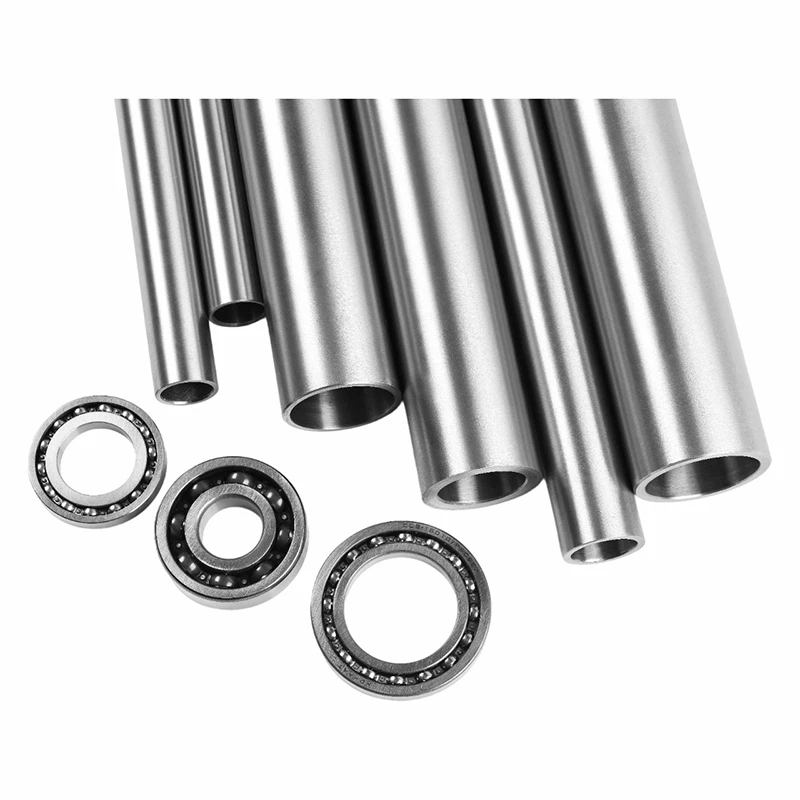
Factors Affecting the Expansion and Contraction of P5 Pipe
Composition
P5 Pipe is made of a specific alloy of steel. The chemical composition of this steel plays a significant role in determining its coefficient of thermal expansion. For example, the presence of elements like carbon, chromium, and molybdenum can influence how the metal responds to temperature changes. Different concentrations of these alloying elements can lead to variations in the CTE, which in turn affects how much the pipe will expand or contract.
Temperature Range
The magnitude of expansion and contraction of P5 Pipe is directly related to the temperature range that it experiences. A small change in temperature might result in a negligible expansion or contraction. However, large temperature swings, such as those in industrial processes or outdoor environments, can cause significant dimensional changes in the pipe. For instance, if a P5 Pipe is installed in a high - temperature furnace environment where the temperature can rise from room temperature to several hundred degrees Celsius, the expansion can be substantial.
Pipe Dimensions
The length, diameter, and wall thickness of the P5 Pipe also affect its thermal expansion and contraction behavior. Longer pipes generally experience more significant changes in length due to temperature variations compared to shorter ones. Similarly, pipes with larger diameters may expand more radially than those with smaller diameters. The wall thickness can influence how the pipe distributes the stress caused by thermal expansion and contraction, which is important for maintaining the structural integrity of the pipe.
Consequences of Thermal Expansion and Contraction in P5 Pipe
Stress and Strain
When P5 Pipe expands or contracts and its movement is restricted, stress and strain are generated within the pipe. If the stress exceeds the yield strength of the material, it can lead to deformation, such as bending or buckling of the pipe. In extreme cases, it can cause the pipe to rupture, which can be extremely dangerous, especially in applications where the pipe is carrying fluids or gases under high pressure.
Joint Integrity
In piping systems, joints are often the weak points when it comes to thermal expansion and contraction. The expansion and contraction of P5 Pipe can put stress on the joints, such as welded joints or flanged connections. Over time, this can lead to leaks or failures at the joints, which can disrupt the operation of the entire system and may require costly repairs.
System Performance
In applications where precise dimensions are critical, such as in Hydraulic Cylinder Pipe or 4140 Seamless Tubing used in high - precision machinery, the thermal expansion and contraction of P5 Pipe can affect the overall performance of the system. For example, in a hydraulic system, dimensional changes in the pipe can lead to inaccurate fluid flow rates or pressure variations, which can compromise the functionality of the equipment.
Mitigating the Effects of Thermal Expansion and Contraction
Expansion Joints
One common method to mitigate the effects of thermal expansion and contraction in P5 Pipe is to install expansion joints in the piping system. These joints are designed to absorb the movement of the pipe caused by temperature changes, reducing the stress on the pipe and its joints. Expansion joints can be made of various materials, such as rubber or metal bellows, and are available in different configurations to suit different applications.
Flexible Supports
Using flexible supports for the P5 Pipe can also help to accommodate its thermal movement. These supports allow the pipe to expand and contract freely without being restricted, minimizing the stress on the pipe. Flexible supports can be adjusted or designed to follow the movement of the pipe, ensuring that it remains in a stable position during temperature variations.
Proper Installation
During the installation of P5 Pipe, it is crucial to consider the potential for thermal expansion and contraction. This includes leaving sufficient clearance for the pipe to expand and providing proper alignment. If the pipe is installed too tightly or without considering thermal movement, it is more likely to experience stress and damage when the temperature changes.
Applications of P5 Pipe and Thermal Considerations
P5 Pipe is widely used in various industries due to its excellent mechanical properties and corrosion resistance. In the power generation industry, for example, P5 Pipe is used in high - temperature and high - pressure steam systems. In these applications, the pipes are exposed to significant temperature variations, and proper design and installation to account for thermal expansion and contraction are essential to ensure the safe and efficient operation of the system.
In the oil and gas industry, P5 Pipe is used for transporting fluids and gases over long distances. The pipes may be exposed to different temperature conditions along their length, from the cold environment during transportation or storage to the high - temperature environment during refining or processing. Understanding and managing the thermal expansion and contraction of the pipes is crucial to prevent pipeline failures and ensure the integrity of the entire infrastructure.
Conclusion and Call to Action
In conclusion, P5 Pipe does expand and contract with temperature changes, and this behavior has significant implications for its use in various applications. As a supplier of P5 Pipe, we understand the importance of providing our customers with high - quality products and technical support to ensure that they can use our pipes safely and effectively.
If you are considering using P5 Pipe in your project, it is essential to factor in the thermal expansion and contraction characteristics of the pipe. Our team of experts is available to assist you in choosing the right pipe for your application, providing advice on installation, and recommending appropriate measures to mitigate the effects of temperature changes. Contact us to discuss your procurement needs and start a productive discussion on how our P5 Pipe can meet your requirements.
References
- Callister, W. D., & Rethwisch, D. G. (2018). Materials Science and Engineering: An Introduction (10th ed.). Wiley.
- ASME Boiler and Pressure Vessel Code, Section VIII, Division 1. Rules for Construction of Pressure Vessels.
- Bonnell, D. A. (2001). The Science and Engineering of Materials. Thomson Learning.